
Viva Naturals
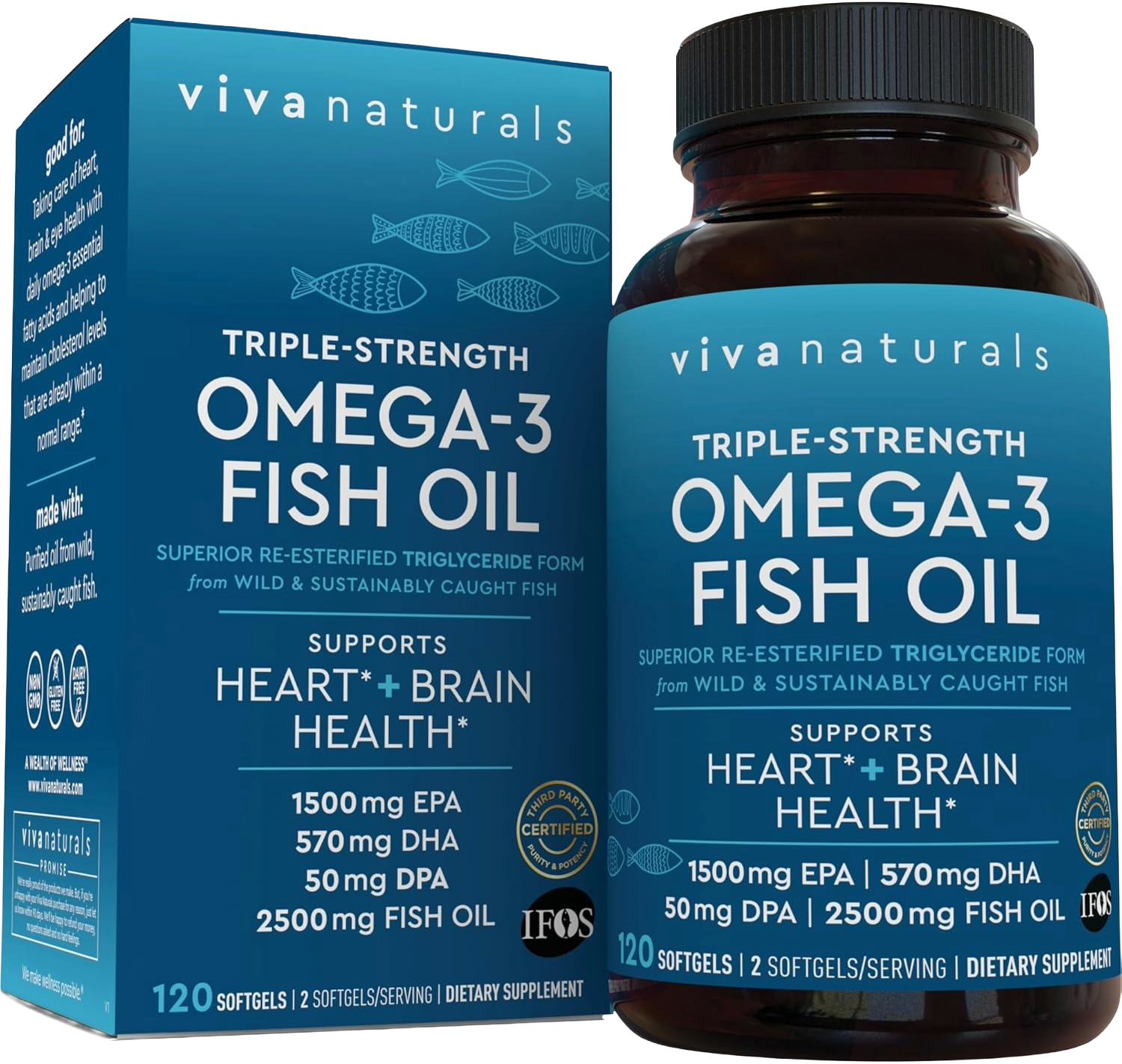
Viva Naturals Triple-Strength Omega-3 Fish Oil - High-Potency EPA, DHA & DPA for Heart, Brain, and Eye Support (120 Softgels)
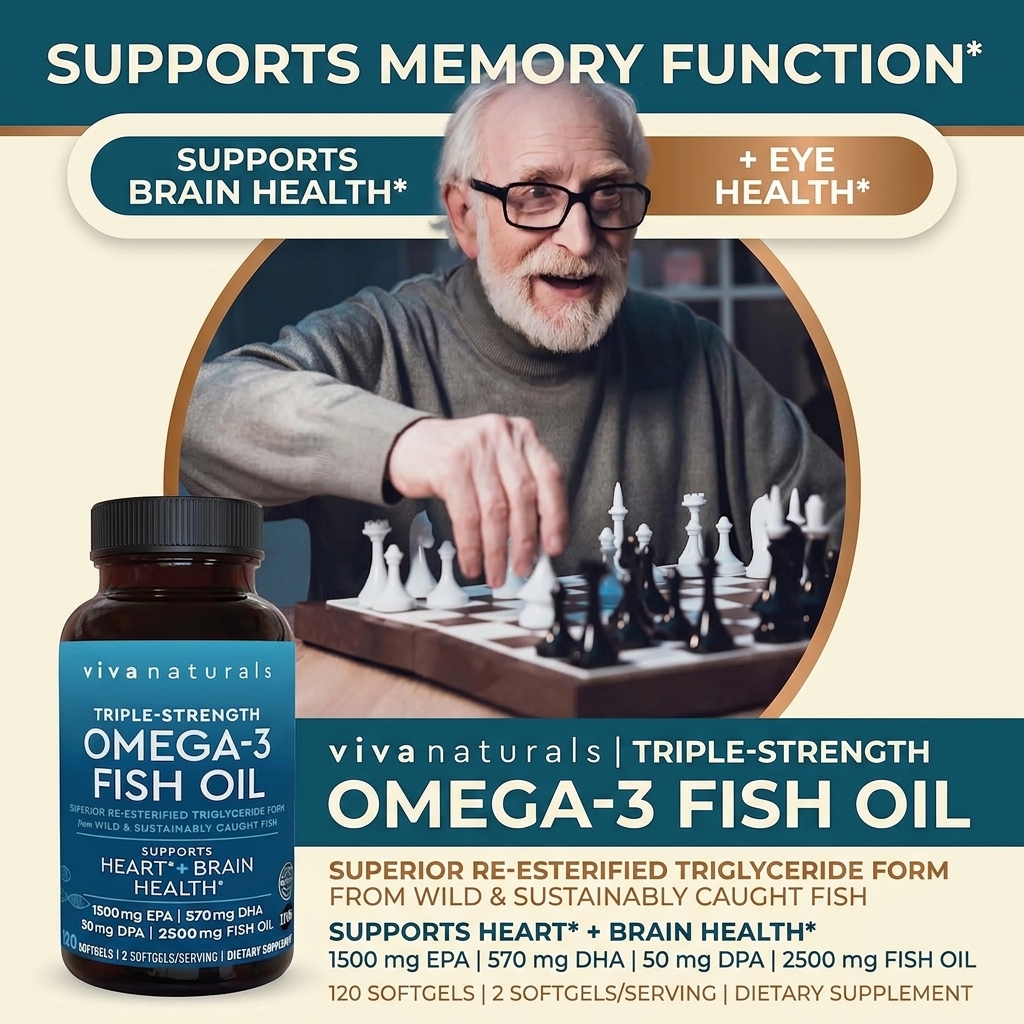
2,500 mg of concentrated fish oil per serving, in the more absorbable triglyceride form. The steady, foundational omega-3 most cognitive stacks skip.
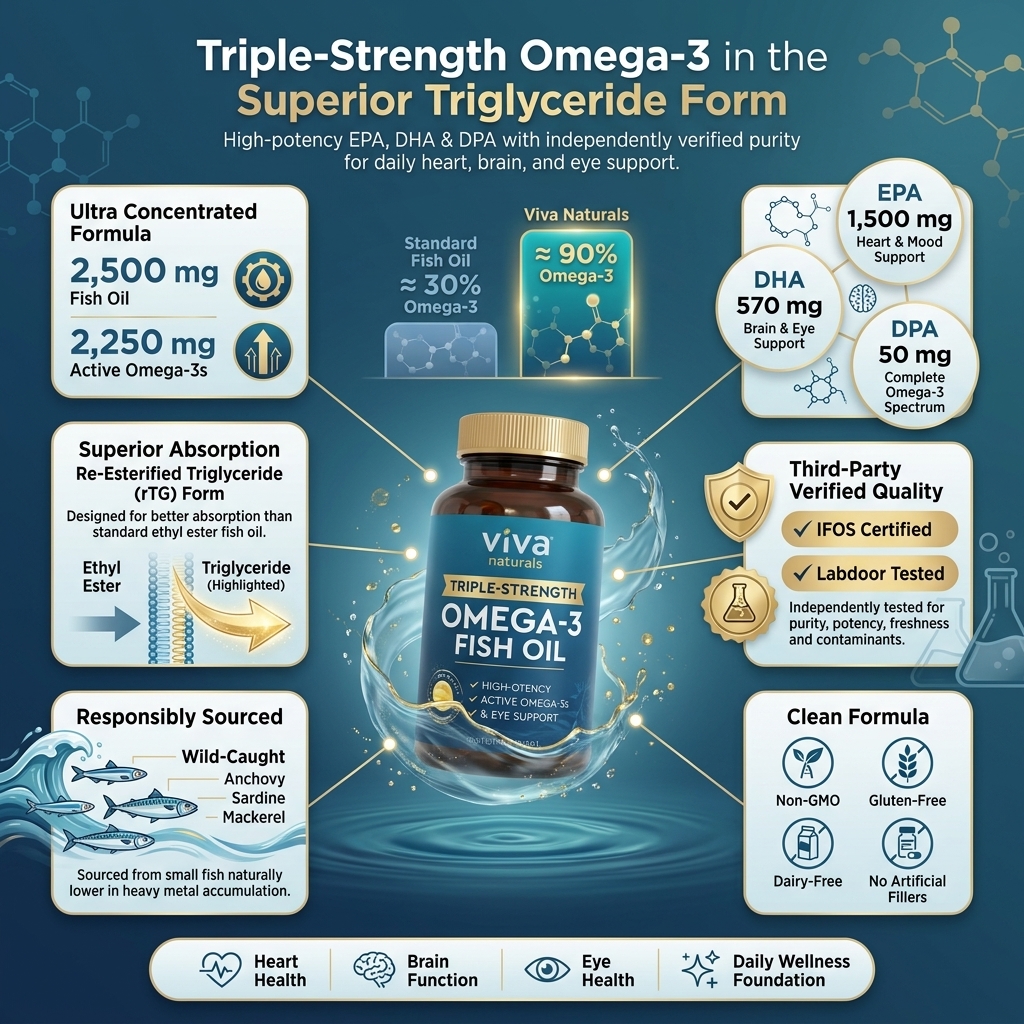
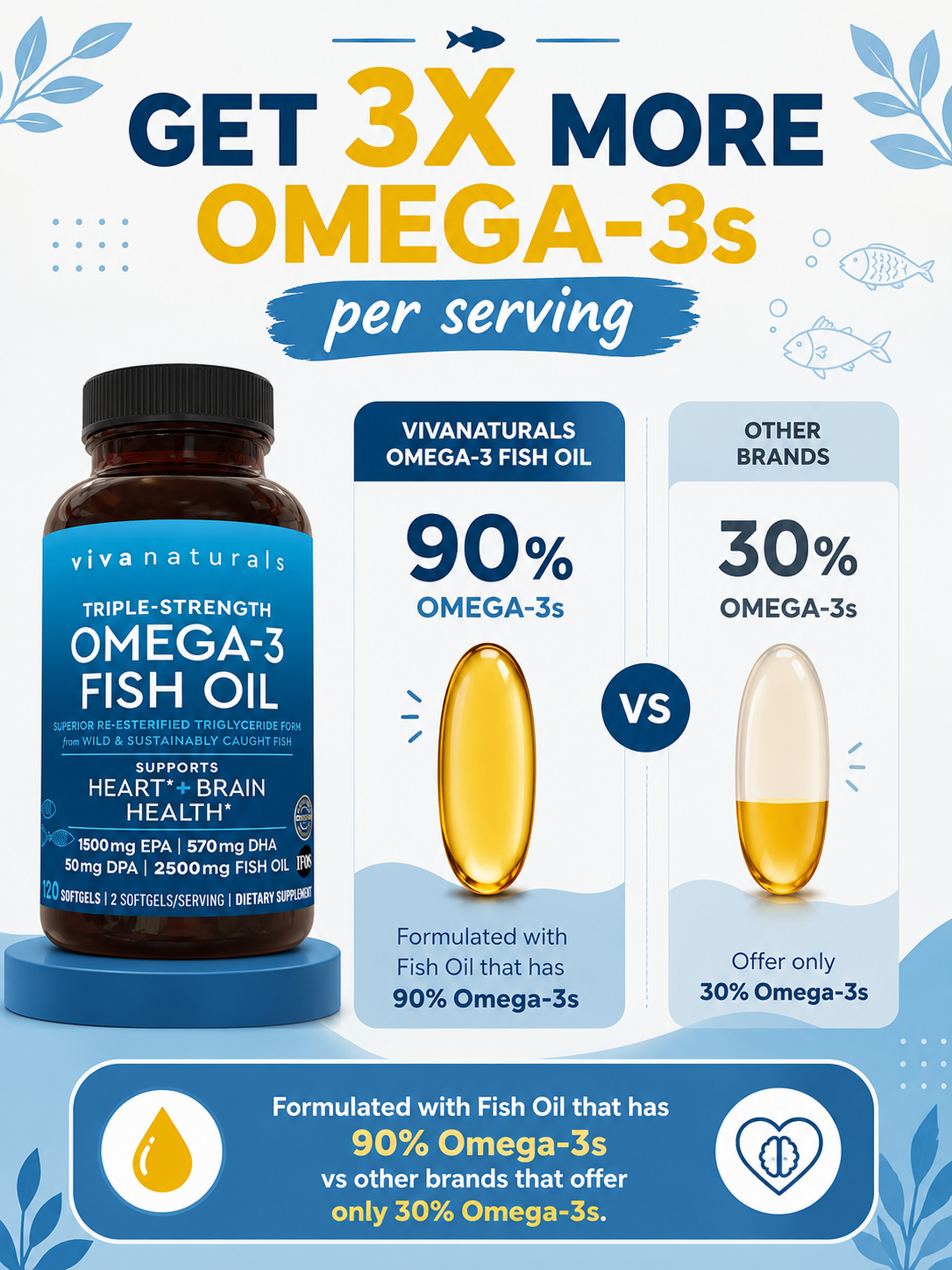
- 2,500 mg of fish oil per serving, genuinely concentrated. Of that, 2,250 mg is active omega-3s, roughly 90% of the oil by weight, well above the 30% or so you'd get from an unconcentrated natural fish oil.
- 1,500 mg EPA, 570 mg DHA, and 50 mg DPA. A full three-fatty-acid profile rather than just the two most brands bother listing.
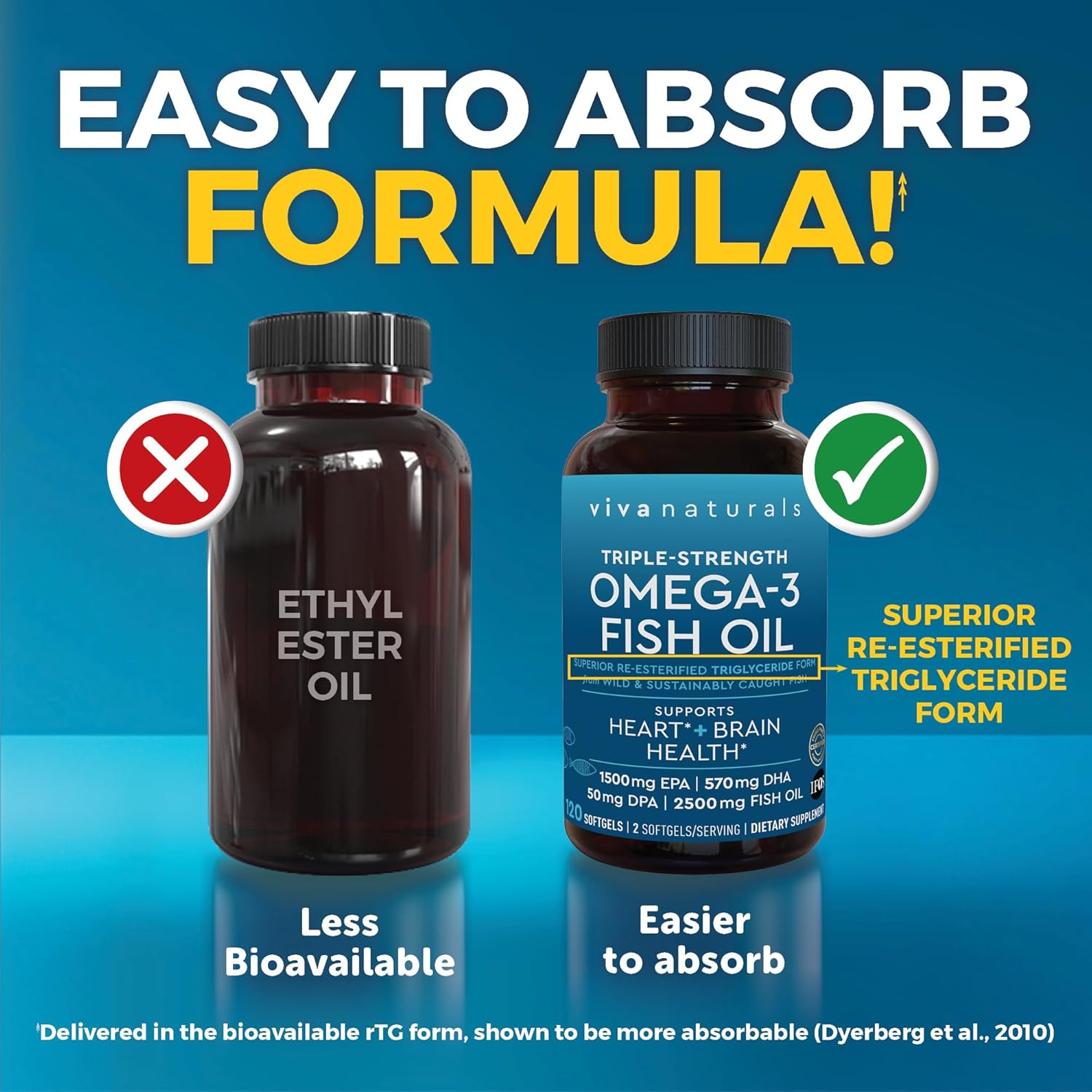
- Re-esterified triglyceride (rTG) form. The same form shown in controlled research to absorb meaningfully better than the cheaper ethyl-ester fish oil most budget brands use.
- IFOS certified and Labdoor tested. Independently verified for purity and potency by two separate third parties, not just an in-house claim on the label.
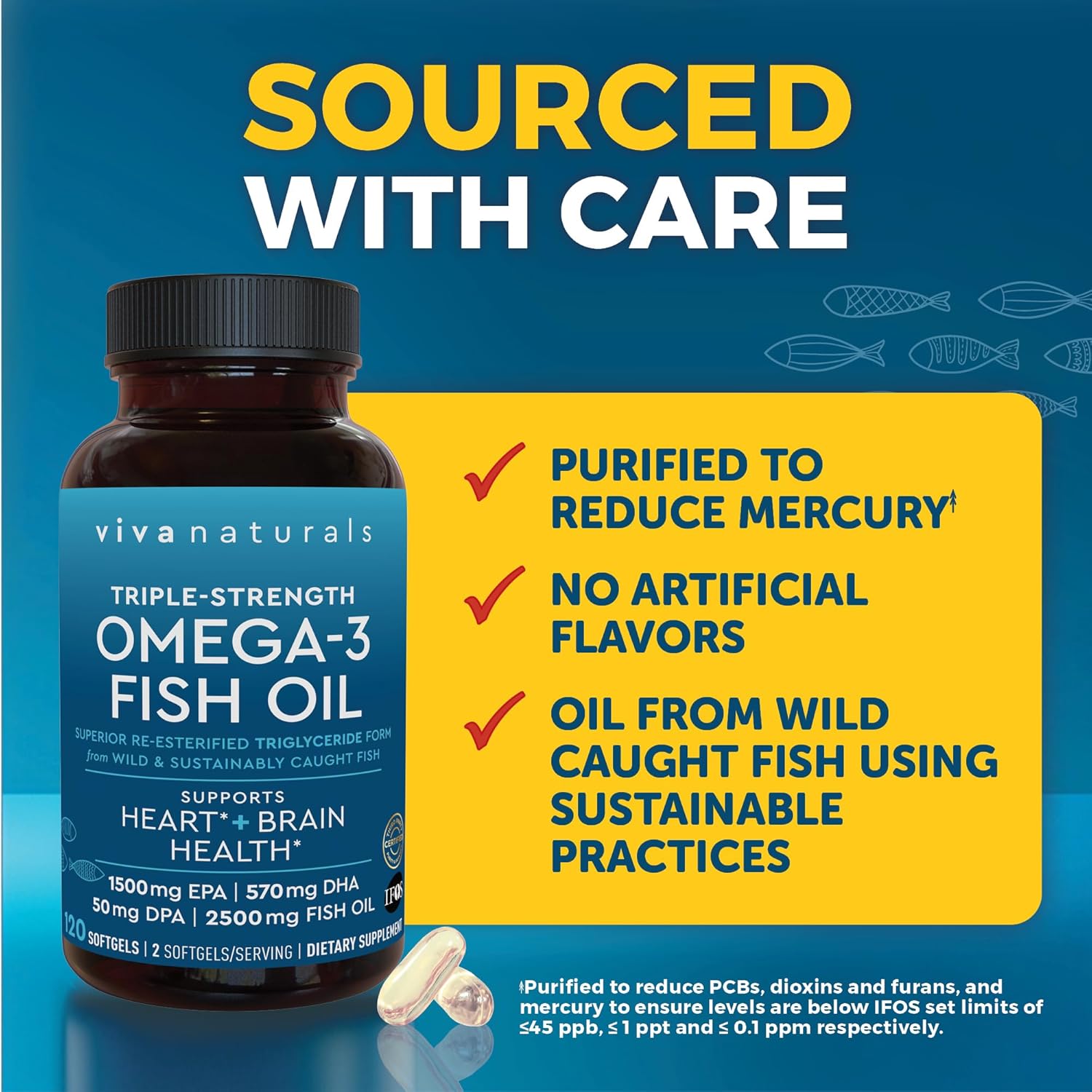
- Sourced from small, wild-caught fish. Anchovy, sardine, and mackerel sit low on the marine food chain, which means naturally lower heavy-metal accumulation before purification even starts.
- Non-GMO, gluten-free, and dairy-free. Though worth knowing upfront, the softgel itself is fish-derived gelatin, so this one isn't vegetarian or vegan. More on that below.
These statements have not been evaluated by the Food and Drug Administration. This product is not intended to diagnose, treat, cure, or prevent any disease.
Omega-3 is the one foundation that gets skipped constantly in nootropic stacks, mostly because “fish oil” doesn’t sound exciting next to a branded choline or an adaptogen with a pronounceable name. That’s a mistake. DHA makes up roughly 40% of the fatty acid content in your brain’s gray matter, and it’s a structural building block your body needs from diet or supplements, not something a stimulant or an amino acid can substitute for.
We carry this Omega-3 brand because the concentration and the absorbable form are both genuinely better than what most fish oil on a shelf actually delivers for cogntive enhancement.
One honest positioning note. This formula is EPA-forward (1,500 mg EPA against 570 mg DHA, roughly a 2.6:1 ratio), not the DHA-dominant ratio some brands build specifically around the brain-structure story. That’s not a flaw, EPA has its own solid evidence base for cardiovascular and mood-related support, but if your only goal is maximizing DHA specifically, know that going in.
That said, 570 mg of DHA per serving clears the bar we look for in a genuinely brain-relevant dose, so this isn’t a token amount either.
And one honesty note on the concentration claim itself: the “90% omega-3s” figure is real math (2,250 mg out of 2,500 mg total fish oil), and it’s a legitimate result of the re-esterification process, not a trick. We’re just not going to repeat a specific comparison against unnamed “other brands” we haven’t independently verified ourselves. Last thing worth flagging plainly: the softgel capsule is made from fish and tilapia gelatin, so this is not a vegetarian or vegan product, unlike some of the plant-based capsules.
Product Details
Learn More
What is in the softgel, and why
Fish oil sourced from anchovy, sardine, and mackerel, concentrated through a re-esterification process into the triglyceride form your body absorbs most efficiently, plus mixed tocopherols to protect the oil from oxidizing on the shelf. Three omega-3 fatty acids are called out on the panel: EPA, DHA, and DPA.
The three fatty acids, and their roles
- EPA (Eicosapentaenoic Acid), 1,500 mg. The most-studied omega-3 for cardiovascular support and for mood-related outcomes specifically. In cognitive and mental-performance research, EPA's role is less about brain structure and more about its anti-inflammatory activity, since neuroinflammation is one of the mechanisms researchers link to low mood and cognitive fog.
- DHA (Docosahexaenoic Acid), 570 mg. The structural fatty acid, roughly 40% of the brain's gray matter phospholipids by composition. This is the fatty acid most directly tied to the "brain health" side of an omega-3's story, and 570 mg clears the threshold we consider meaningful for that positioning, even inside a formula that leans EPA-forward overall.
- DPA (Docosapentaenoic Acid), 50 mg. The least talked-about of the three, and the least studied. DPA sits structurally between EPA and DHA, and the body can convert it into either one as needed, functioning as a kind of flexible reserve. Research on DPA specifically is still early, so we're not going to oversell it here.
The ratio question, honestly
Omega-3 formulas generally fall into two camps. DHA-dominant ratios (2:1 to 4:1 DHA to EPA) are built specifically around the cognitive, brain-structure story. EPA-dominant ratios, like this one, are built more around cardiovascular and mood-related support, with brain benefits as a genuine but secondary story. Most mass-market fish oil actually lands closer to even, which makes a clearly EPA-forward, high-potency formula like this one a reasonable "whole-body foundation" choice rather than a narrowly cognitive-only product.
Why the triglyceride form matters
Fish oil comes in a few different chemical forms, and they are not interchangeable in the body. Cheaper ethyl ester (EE) fish oil is easier and cheaper to manufacture at high concentrations, but it absorbs noticeably worse, roughly 73% as well as natural fish oil in controlled comparisons. The re-esterified triglyceride (rTG) form used here converts the concentrated oil back into the triglyceride structure your gut is actually built to absorb, and in the same body of research it outperformed natural fish oil, at around 124% relative bioavailability. Concentration without the right form is a half-measure; this pairs both.
Purification and heavy metals
Fish accumulate environmental contaminants over their lifespan, which is exactly why sourcing smaller, shorter-lived fish (anchovy, sardine, mackerel) instead of large predatory fish like tuna or swordfish matters before purification even begins. This oil is further purified and tested to fall below the IFOS-set limits of 45 parts per billion for PCBs, 1 part per trillion for dioxins and furans, and 0.1 parts per million for mercury.
What the evidence does and does not say
The cardiovascular case for EPA and DHA is well established. The cognitive case is genuinely more mixed: results across trials are inconsistent, and the strongest cognitive signal shows up in people who started with a low baseline omega-3 status rather than in people who were already getting enough. It has not been shown to meaningfully help people already experiencing significant cognitive decline. Consider this product as a structural, ongoing brain-lipid support, not an acute focus aid, and definitely not a claim that it will make a healthy brain sharper than it already is.
Who it tends to suit
- Anyone building a foundational stack who doesn't already eat fatty fish two or more times a week.
- People who want the cardiovascular and mood-related case for omega-3, not only the cognitive one.
- Anyone who has tried cheaper fish oil, noticed fishy burps or an oily aftertaste, and wants to see if a better form fixes it.
Who it is probably not for
- Anyone who is vegetarian or vegan. The softgel itself is fish and tilapia gelatin.
- Anyone with a fish or shellfish allergy.
- Anyone specifically chasing a DHA-dominant ratio for a narrowly cognitive stack; this formula is built EPA-forward instead.
How To Use
Take 2 softgels daily with a meal. Fat improves absorption of fat-soluble nutrients generally, and omega-3s are no exception, so pairing it with food rather than taking it on an empty stomach is worth the small habit change.
Give it real time. Unlike a stimulant, omega-3 status builds gradually. Your body's omega-3 index (the standard way researchers measure omega-3 status in blood) typically takes around 3 to 4 months of consistent daily intake to fully reflect a change in how much you're taking in. A week or two of use is not a fair test of what this product does.
On fishy burps, since it comes up honestly. The re-esterified triglyceride form and the mixed-tocopherol freshness protection here both work against the oxidation that usually causes the fishy aftertaste, but if you're still sensitive to it: take your dose with a fuller meal, and consider keeping the bottle in the fridge or freezer, which slows any capsule breakdown and tends to reduce burping for a lot of people.
How to dose it
- 2 softgels once daily is the full studied serving on this label.
- Splitting into one softgel with two separate meals is a fine variation if that fits your routine better.
How to stack it
- Fits cleanly alongside a choline source, magnesium, or an adaptogen blend, since the mechanism here doesn't overlap with any of those.
- No cycling required. Unlike caffeine or the adaptogens elsewhere in our lineup, omega-3 is meant to be a steady, ongoing daily foundation rather than something you take breaks from.
What to avoid
- Taking it on a consistently empty stomach, which reduces absorption and increases the odds of an oily aftertaste.
- Combining high-dose fish oil with blood-thinning medication without your doctor's input, since omega-3s have a mild antiplatelet effect at higher intakes.
Third Party Lab Testing
- IFOS certified. The International Fish Oil Standards program is an independent, University of Guelph-affiliated testing body that checks fish oil for potency, purity, freshness, and contaminant levels against its own published limits, one of the more recognized third-party marks specific to this category.
- Labdoor tested, both for general accuracy and purity and separately for sport, an additional layer of independent verification beyond IFOS.
- Purified below IFOS contaminant limits, tested to fall under 45 ppb PCBs, 1 ppt dioxins and furans, and 0.1 ppm mercury.
- Non-GMO, gluten-free, and dairy-free, independently supporting the label's dietary claims.
As with any supplement, the strongest form of proof is a batch-specific Certificate of Analysis tied to the lot number on your bottle. If verifying a specific batch matters to you, note the lot number and request the COA directly from the manufacturer.
Ingredients
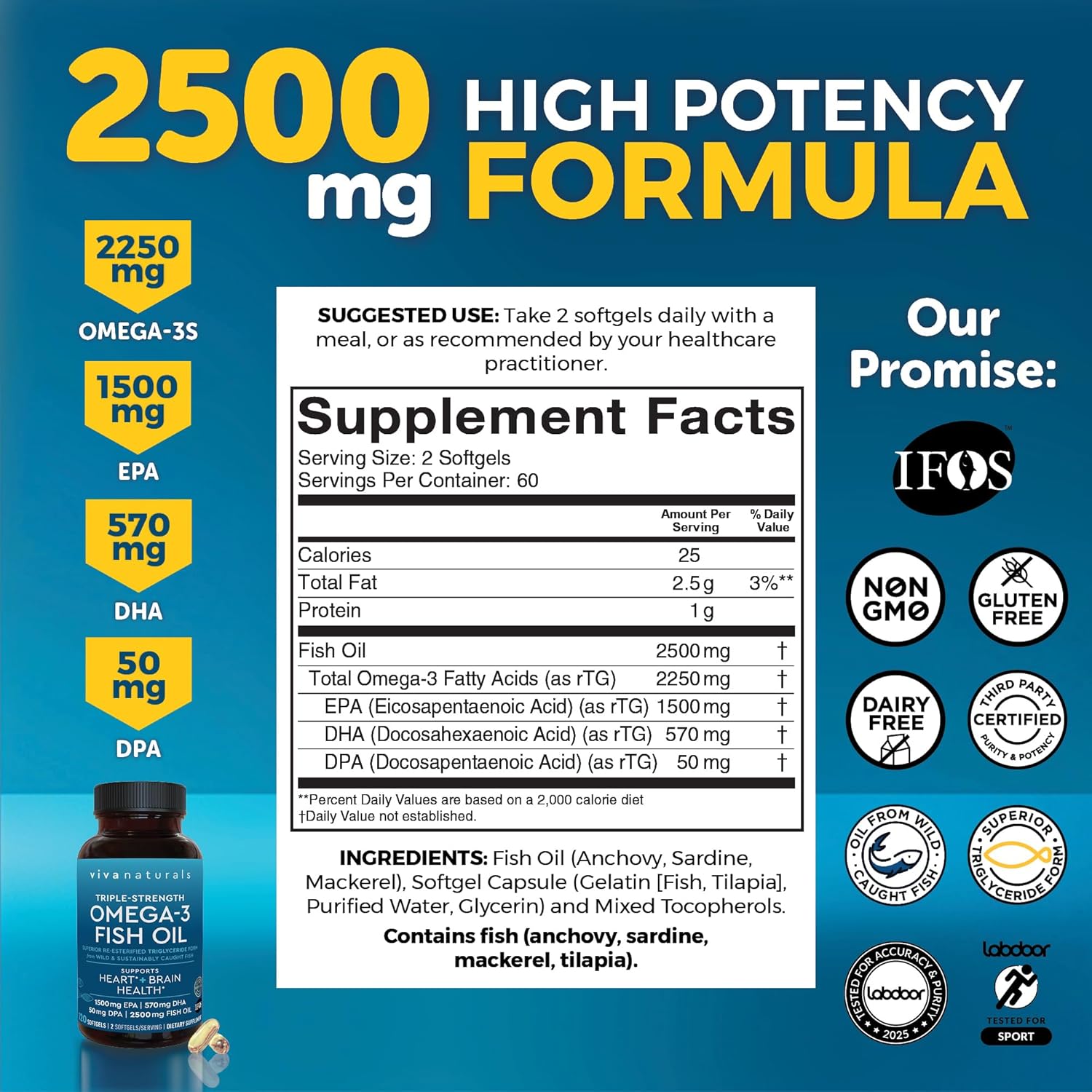
Suggested Use: Take 2 softgels daily with a meal, or as recommended by your healthcare practitioner.
Supplement Facts - Serving Size: 2 Softgels - Servings Per Container: 60
| Per 2 softgels | Amount | % DV |
|---|---|---|
| Calories | 25 | n/a |
| Total Fat | 2.5 g | 3%** |
| Protein | 1 g | n/a |
| Fish Oil | 2,500 mg | † |
| Total Omega-3 Fatty Acids (as rTG) | 2,250 mg | † |
| EPA (Eicosapentaenoic Acid) (as rTG) | 1,500 mg | † |
| DHA (Docosahexaenoic Acid) (as rTG) | 570 mg | † |
| DPA (Docosapentaenoic Acid) (as rTG) | 50 mg | † |
** Percent Daily Values are based on a 2,000 calorie diet. † Daily Value (DV) not established.
Other Ingredients: Fish oil (anchovy, sardine, mackerel), softgel capsule (gelatin [fish, tilapia], purified water, glycerin), mixed tocopherols.
Contains: Fish (anchovy, sardine, mackerel, tilapia). Not suitable for vegetarians or vegans.
Free from: GMOs. Gluten. Dairy.
Warnings (worth reading)
- Contains fish and tilapia-derived gelatin. Not suitable for anyone with a fish or shellfish allergy.
- Not a vegetarian or vegan product.
- Consult your doctor before use if you are pregnant, nursing, or taking blood-thinning medication, since omega-3s can have a mild antiplatelet effect at higher intakes.
- Discontinue and consult a physician if you experience adverse effects.
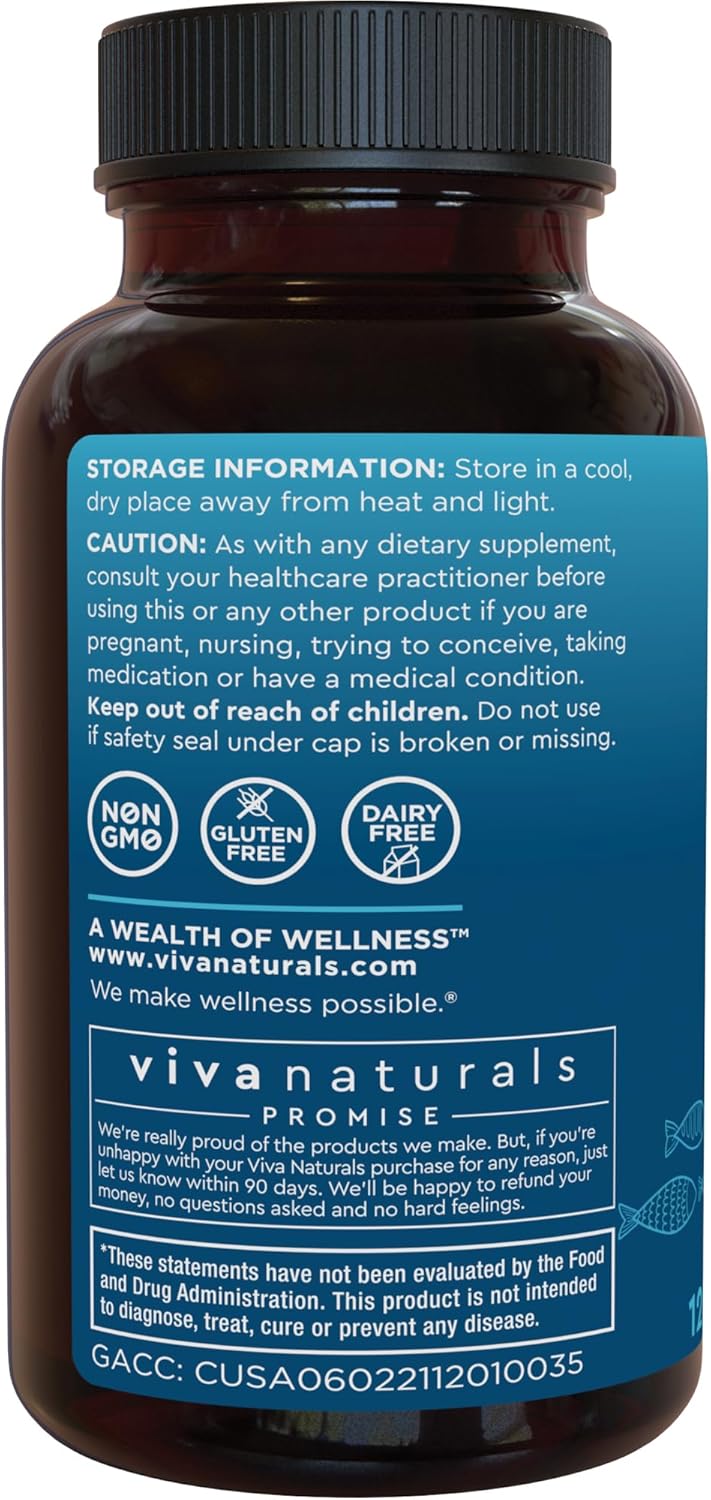
- Keep out of reach of children. Store in a cool, dry place, or refrigerate for extended freshness.
These statements have not been evaluated by the Food and Drug Administration. This product is not intended to diagnose, treat, cure, or prevent any disease. It is not a substitute for professional medical advice. For anything you are unsure about, talk to a qualified healthcare provider.


Customer Reviews
No reviews yet. Be the first to share your experience.